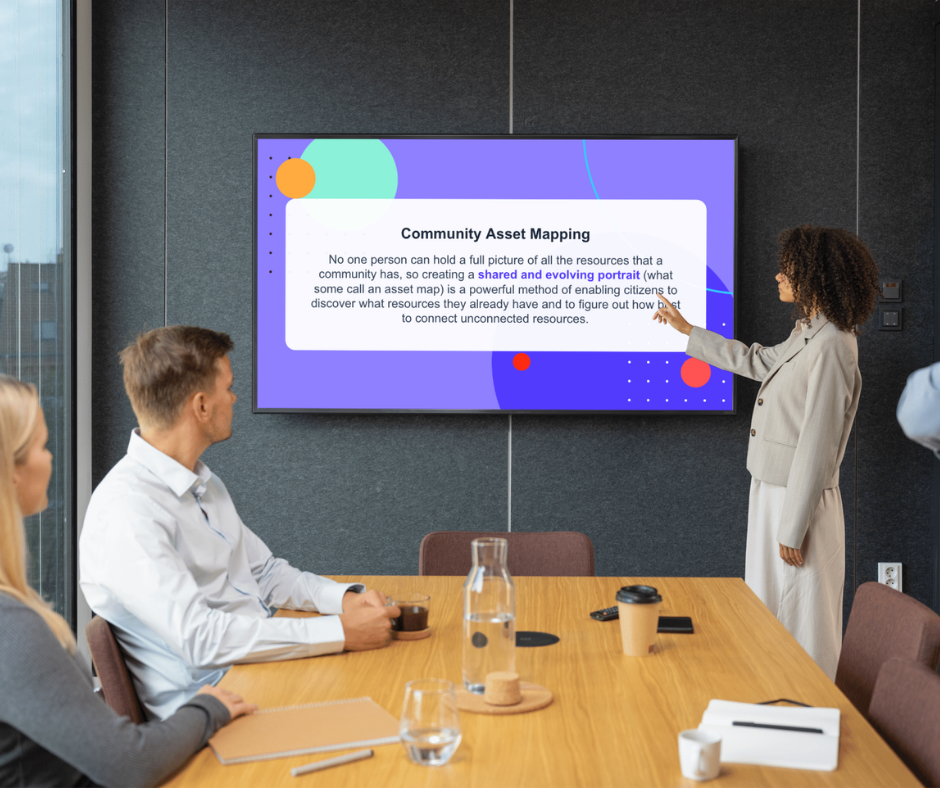
*Three case studies below spanning learning product design, curriculum and facilitation, and enterprise L&D. Additional samples available on request.
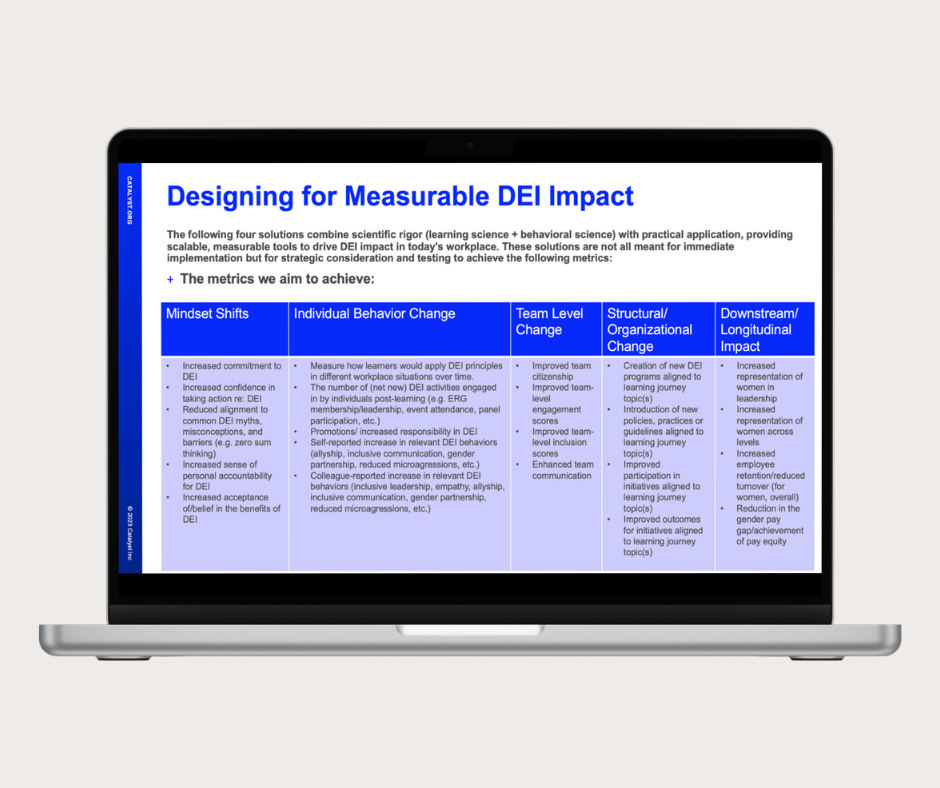
Redesigning How 800+ Global Companies Learn Workplace Inclusion
To turn a world-class research-backed content library into a scalable learning system and define its next generation of product offerings.
Catalyst had one of the most credible DEI research libraries in the field and no learning system connecting it to how practitioners actually work. I designed 8 learning journeys scaffolded across three maturity levels and three personas, developed original content to close identified gaps, and conducted the stakeholder research, competitive analysis, and product innovation work needed to define Catalyst's next generation of learning experiences.
Scaling High-Stakes Conversation Practice with AI
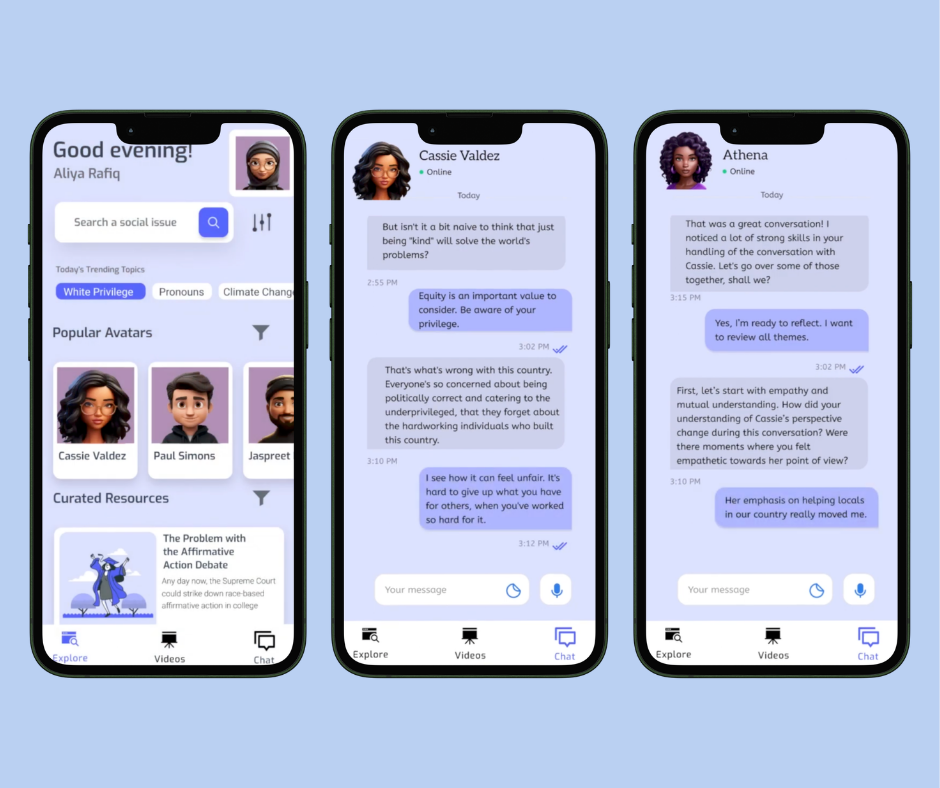
To make difficult conversations trainable through simulation, feedback, and real-time coaching.
While most Americans believe polarization has made the country ungovernable, college students are self-censoring rather than practicing the dialogue skills that could change that. I designed and built CivicXChange, an AI-powered civic dialogue training platform, conducting original needfinding research across 35+ experts and learners, engineering a dual-AI architecture combining a challenging conversation persona with a reflective coaching agent, and running a 22-participant learner study across six universities to measure affective change.
Building How Stanford Teaches Dialogue, Conflict, and Social Change
To design curriculum, assessment, and facilitator training that prepare learners to think, talk, and act across difference.
Stanford's inclusion, belonging and integroup dialogue programs served hundreds of students annually with no competency framework or shared pedagogy, inconsistent facilitation across every offering, and limited evaluation infrastructure. I led a mixed-methods evaluation and used those findings to design a full 10-week course, a PhD-level workshop series, a cross-program competency framework, and dozens of original learning activities spanning lesson plans, Figma prototypes, and field-based experiences. The result was students, facilitators, and program staff who left better equipped and more confident in their ability to do the work.